
A key that will not enter, turn or come out of the ignition can leave the vehicle unusable even when the engine and battery are otherwise in working condition. The problem may involve a worn key, mechanical ignition cylinder, steering lock, damaged wafer or another component in the key-operated portion of the starting system.
Local Locksmith PCB provides mobile ignition lock inspection and repair for supported vehicles throughout Panama City Beach. Our automotive locksmith work focuses on the key, ignition lock cylinder and related mechanical components. Engine, starter, ignition coil and extensive electrical problems generally require an automotive repair shop.
Call (850) 238-2230 and provide the vehicle’s year, make, model and current location. Describe whether the key will not enter, will not turn, is stuck or has broken inside the ignition.
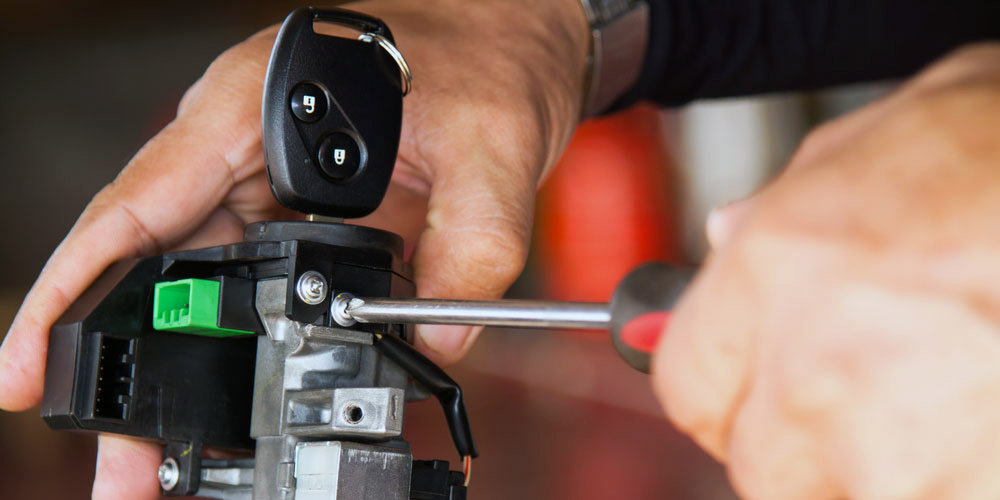
What an Automotive Locksmith Repairs in the Ignition
The mechanical ignition lock is the component into which a traditional key is inserted. Inside the cylinder, wafers or similar components interact with the cuts on the key. When the correct key is used and the components align, the cylinder can rotate.
Wear, debris, a damaged key or failure inside the cylinder can interfere with that movement. Depending on the vehicle and condition of the hardware, the cylinder may be serviceable, removable or replaceable.
The electrical ignition switch may be connected to the mechanical cylinder but is not always the same component. On some vehicles, turning the cylinder mechanically operates a separate electrical switch.
Our service must begin with determining whether the symptoms point to the mechanical key-and-cylinder system or another part of the vehicle.
Problems That Usually Require a Mechanic
Not every vehicle that fails to start has an ignition lock problem. A discharged battery, failed starter, damaged wiring, defective ignition coil, fuel problem or engine control issue may prevent the vehicle from running even when the key turns normally.
If the key rotates to the expected positions but the engine does not crank, the cause may be electrical or mechanical rather than the lock cylinder. Dashboard warning lights, clicking sounds, intermittent stalling and engine misfires may also indicate systems outside locksmith work.
Push-button start vehicles rely on electronic modules, sensors and proximity authorization rather than a traditional keyed ignition cylinder. Some key or fob problems may be locksmith-related, while failures involving the start button, wiring or vehicle modules may require a qualified automotive technician.
A clear description of the symptoms helps determine whether locksmith service is the appropriate first step.
Key Will Not Turn in the Ignition
A key that enters fully but will not turn may be affected by a worn blade, pressure from the steering lock, an incorrect key, cylinder wear or internal damage.
Do not apply excessive force. Twisting the key with pliers or another tool can break the blade and leave part of it inside the cylinder.
If a spare key is available, compare its condition and test it carefully. A less-worn spare that operates normally may indicate that the everyday key has deteriorated.
If every key produces the same symptom, the cylinder or another vehicle component may require inspection. The technician should confirm the cause before replacing parts.
Steering Wheel Lock Pressure
On vehicles with a mechanical steering lock, the wheel can place pressure on the ignition when the front tires are turned or the vehicle settles after parking. The key may appear unable to rotate even though the cylinder has not failed.
Do not strike the key or force the steering wheel. Follow the vehicle manufacturer’s instructions for relieving steering lock pressure. If the key remains unable to turn, stop before it bends or breaks.
Repeated steering lock problems, grinding or unusual movement should be inspected. A technician can help determine whether the issue involves ordinary steering lock pressure, the key or the ignition cylinder.
Key Will Not Enter the Ignition
A key that stops before entering fully may be bent, damaged or incompatible with the cylinder. Something may also be obstructing the keyway, or an internal component may have shifted out of position.
Do not push wire, another key or household tools into the opening. This can move an obstruction deeper or damage parts inside the cylinder.
Inspect the key for bending, cracks or damaged edges. If the vehicle has several similar keys, confirm that the correct key is being used.
The technician can examine the keyway and determine whether the problem is related to the key, an obstruction or internal cylinder damage.
Key Is Stuck in the Ignition
A key may become stuck because the cylinder has worn, the key is damaged or the vehicle has not fully recognized the correct park position. Some vehicles prevent key removal when the gear selector or interlock system is not in the expected state.
Confirm that the vehicle is safely parked and follow the manufacturer’s normal shutdown procedure. Do not repeatedly pull, twist or pry the key.
If the key turns but cannot be removed, the issue may involve the cylinder or another vehicle interlock. A locksmith can evaluate supported mechanical ignition problems, while selector, interlock and electrical faults may require an automotive repair facility.
Tell us whether the engine is running, whether the key returns to the off position and whether the shifter moves normally.
Broken Key Inside the Ignition
A key can break after years of wear or when excessive force is applied to a resistant cylinder. The fragment may remain near the entrance or become lodged deeper inside the ignition.
Do not insert the remaining piece or another object behind the fragment. This can push it farther into the keyway and complicate extraction.
The technician evaluates the position of the fragment and condition of the cylinder. Extraction may be possible, but the cause of the break should also be identified before another key is used.
If the cylinder remains difficult to operate after the fragment is removed, repair or replacement may be necessary.
Worn Car Keys and Ignition Problems
A metal key blade changes gradually through daily use. Cuts become rounded, edges wear down and the blade can bend slightly. The deterioration may be difficult to notice because it occurs over a long period.
A worn key may stop aligning the components inside the ignition cylinder correctly. It may require movement, partial withdrawal or repeated attempts before it turns.
Copying directly from a badly worn key can reproduce the same defects. The key and cylinder should be evaluated before another duplicate is produced.
If a less-used spare operates the ignition normally, creating a new key from the better example may be appropriate. More information is available on our car key duplication page.
Ignition Cylinder Wear and Internal Damage
Mechanical ignition cylinders contain small components that must align with the key. Repeated use, contamination and worn keys can affect these parts over time.
Symptoms may include a key that works only at a particular angle, a cylinder that feels rough, intermittent turning or a key that can be removed in an unexpected position.
The cylinder must be inspected before a repair plan is confirmed. Some cylinders can be serviced or rebuilt using compatible components. Others may need to be replaced.
Parts and procedures differ significantly among vehicle manufacturers and model years.
Ignition Cylinder Repair Versus Replacement
Repair attempts to retain a serviceable cylinder by correcting compatible internal components. Replacement installs another cylinder when the original is severely worn, damaged or unsuitable for continued use.
The correct choice depends on the cylinder design, extent of damage and availability of compatible components. Replacement should not be recommended solely because the key is worn.
When a cylinder is replaced, the new ignition may use a different mechanical key unless the replacement can be configured to match the vehicle’s existing key system.
Door locks, ignition locks and immobilizer programming must be considered separately. A key that mechanically turns the cylinder may still require a recognized transponder before the engine starts.
Can the New Ignition Use the Existing Key?
On some supported vehicles, a replacement or rebuilt ignition cylinder can be configured to work with the existing mechanical key pattern. Availability depends on the cylinder design, condition of the current key and compatible parts.
If the current key is badly worn, using it as the basis for the rebuilt cylinder may create continued problems. A better original, key information or another supported method may be needed.
Matching the mechanical key does not automatically address immobilizer programming. The transponder and mechanical blade perform different functions.
Transponder Keys and the Ignition Cylinder
A transponder key contains both a mechanical blade and an electronic chip. The blade turns the ignition cylinder, while the chip communicates with the vehicle’s immobilizer.
If the blade turns but the immobilizer does not recognize the chip, the vehicle may not start. If the chip is recognized but the blade cannot rotate the cylinder, the mechanical key or ignition lock may be the problem.
These two functions should be diagnosed separately. Replacing the mechanical cylinder does not automatically program a transponder, and programming a new chip does not repair a damaged cylinder.
For supported chip key services, visit our transponder key page.
Remote-Head Keys and Flip Keys
A remote-head or flip key may contain a mechanical blade, immobilizer chip and remote-control electronics in one housing. Damage to one part does not always mean every function has failed.
A cracked shell may allow the blade to move or place strain on the key near the hinge. Remote buttons may stop working while the mechanical blade continues to operate the ignition.
Tell us whether the key starts the vehicle, turns the door lock and operates the remote functions. This helps separate a shell or remote problem from an ignition cylinder problem.
Push-Button Start Vehicles
Push-button start vehicles typically do not use a traditional ignition cylinder for normal starting. The vehicle detects a compatible proximity fob and enables the start system electronically.
A no-start condition may involve the fob battery, vehicle battery, immobilizer, start button, brake switch, module or another system. Not all of these are locksmith services.
Some proximity fobs contain an emergency mechanical blade used for door access. The blade and door cylinder are separate from the push-button starting system.
For supported smart key and proximity fob services, see our automotive locksmith page.
Ignition Problems After an Attempted Theft
An attempted theft may damage the ignition cylinder, steering column trim, wiring or electronic modules. If you discover evidence of tampering, contact law enforcement and avoid disturbing areas that may be relevant to a report.
After the vehicle has been released for repair, the mechanical ignition components can be inspected. Damage beyond the lock cylinder may require an automotive repair facility, body shop or electrical specialist.
A locksmith should not claim that replacing one cylinder will correct every form of steering-column or electrical damage.
Do Not Force or Lubricate the Ignition
Applying excessive force can bend or break the key, damage internal components and make extraction more difficult. Striking the key or cylinder can also affect surrounding trim and mechanisms.
Avoid pouring household oil or an unidentified lubricant into the ignition. Some substances attract debris or leave residue inside the cylinder.
If the key has become progressively harder to turn, stop before complete failure. Describe the symptoms and allow the lock and key to be inspected.
Vehicle Authorization and Identification
Before an ignition cylinder is repaired, removed or replaced, the technician needs a reasonable basis to confirm authorization. Identification, registration, title, insurance information or company authorization may be required.
The vehicle identification number and ownership records should reasonably correspond with the customer. For a rental vehicle, contact the rental company before requesting ignition work.
Company and fleet vehicles may require approval from an employer or fleet manager.
Supported Makes and Ignition Systems
Ignition components vary by manufacturer, model and year. A brand may use traditional mechanical ignitions, transponder-equipped cylinders and push-button systems across different vehicles.
We evaluate ignition lock service for supported vehicles from manufacturers including Honda, Toyota, Ford, Chevrolet, Dodge and others.
Provide the exact year and model before assuming that a part or repair procedure is available.
When the Vehicle Is Also Locked
An ignition service request may occur while the keys are locked inside the vehicle. Restoring authorized entry is a separate step from diagnosing the ignition.
Tell us whether the vehicle doors are locked and where the key is located. Visit our car lockout page for information about vehicle entry and required authorization.
Mobile Ignition Lock Service
Mobile service allows the ignition to be evaluated at the vehicle’s location when the required work is supported. The vehicle should be parked in a safe and accessible area.
Tell us if the vehicle is in a controlled parking garage, gated community, dealership, repair facility or roadside location. Permission may be required before work can be performed on private property.
If the vehicle is positioned in active traffic or another unsafe location, roadside assistance or law enforcement may need to move or protect the vehicle first.
Emergency Ignition Assistance
Mobile locksmith service is available 24 hours a day. Response time depends on the technician’s current location, traffic, weather and other active calls.
When a technician is available nearby, arrival in approximately 20 to 30 minutes may be possible in parts of Panama City Beach. This is an estimate and cannot be guaranteed.
Service availability must also be confirmed for the specific vehicle and ignition system. See our emergency locksmith page for additional urgent services.
Ignition Repair Service Areas
Our primary ignition lock service area includes Panama City Beach. Mobile technicians also serve Panama City, Lynn Haven and Mexico Beach, depending on availability.
Coverage extends west along the 30A corridor, including Santa Rosa Beach and Rosemary Beach.
Provide the vehicle location, year, make, model and a complete description of the symptoms when calling.
Call for Ignition Lock Repair
Call (850) 238-2230 to check support for your vehicle and request mobile ignition lock service in Panama City Beach.
Ignition Repair Questions
Why will my key not turn in the ignition?
The cause may involve a worn key, steering lock pressure, damaged ignition cylinder or another vehicle system. The key and ignition must be inspected before the cause can be confirmed.
Can a locksmith remove a key broken in the ignition?
Extraction may be possible depending on the fragment’s position and condition of the cylinder. Do not insert additional objects or push the fragment farther inside.
Can an ignition cylinder be repaired instead of replaced?
Some supported cylinders can be serviced or rebuilt when compatible components remain usable. Severely damaged or worn cylinders may require replacement.
Will a replacement ignition use my existing car key?
This may be possible on certain supported vehicles. Compatibility depends on the cylinder design, condition of the current key and available components.
Do you repair ignition coils or starters?
No. Ignition coils, starters, engine problems and extensive electrical faults generally require an automotive repair shop. Our work focuses on supported keys and mechanical ignition lock components.
Can you repair a push-button ignition?
Push-button start problems can involve the fob, immobilizer, battery, switch or vehicle electronics. Supported key and fob issues may be locksmith-related, while other failures require an automotive technician.
Is ignition lock service available at night?
Yes. Mobile locksmith service is available 24 hours a day. Service compatibility and arrival time depend on the vehicle, technician availability, traffic and location.